
Inizia da qui
Di cosa si tratta?
No single colour is established by the research reviewed here as the most attractive choice for every man.
This guide looks at what the studies on red found and how to choose outfit colours for yourself, such as:
- what the research on red actually shows
- why a survey cannot rank colours for you
- five outfit colour directions to try
- comparing garments without turning features into rules
- whether to wear red on a first date
e molti altri!
Choose by the occasion and by the garment beside your face, not by a promised effect.
Punti chiave:
01A 2010 set of experiments reported that red raised women’s ratings of men’s attractiveness; a later re-examination found no statistically significant red effect.
02A survey percentage cannot tell you which shirt a particular person will like on you.
03Start with the occasion, then compare actual garments beside your face in consistent light.
04Skin, hair and eye colour are observations, not rules, and the red studies do not validate seasonal palettes.
There is no single colour established by the research reviewed here as the most attractive choice for every man.
Some experiments have found an effect of red on how women rate photographs of men; other experiments have not reproduced it.
Those results cannot tell you which shirt a particular person will like on you.
You can still make useful colour choices.
Start with the occasion, compare the actual garments beside your face and build an outfit you feel comfortable wearing.
Red, black, blue, brown and lighter colours all offer practical options without promising attraction, confidence or professional success.
What does the research on red actually show?
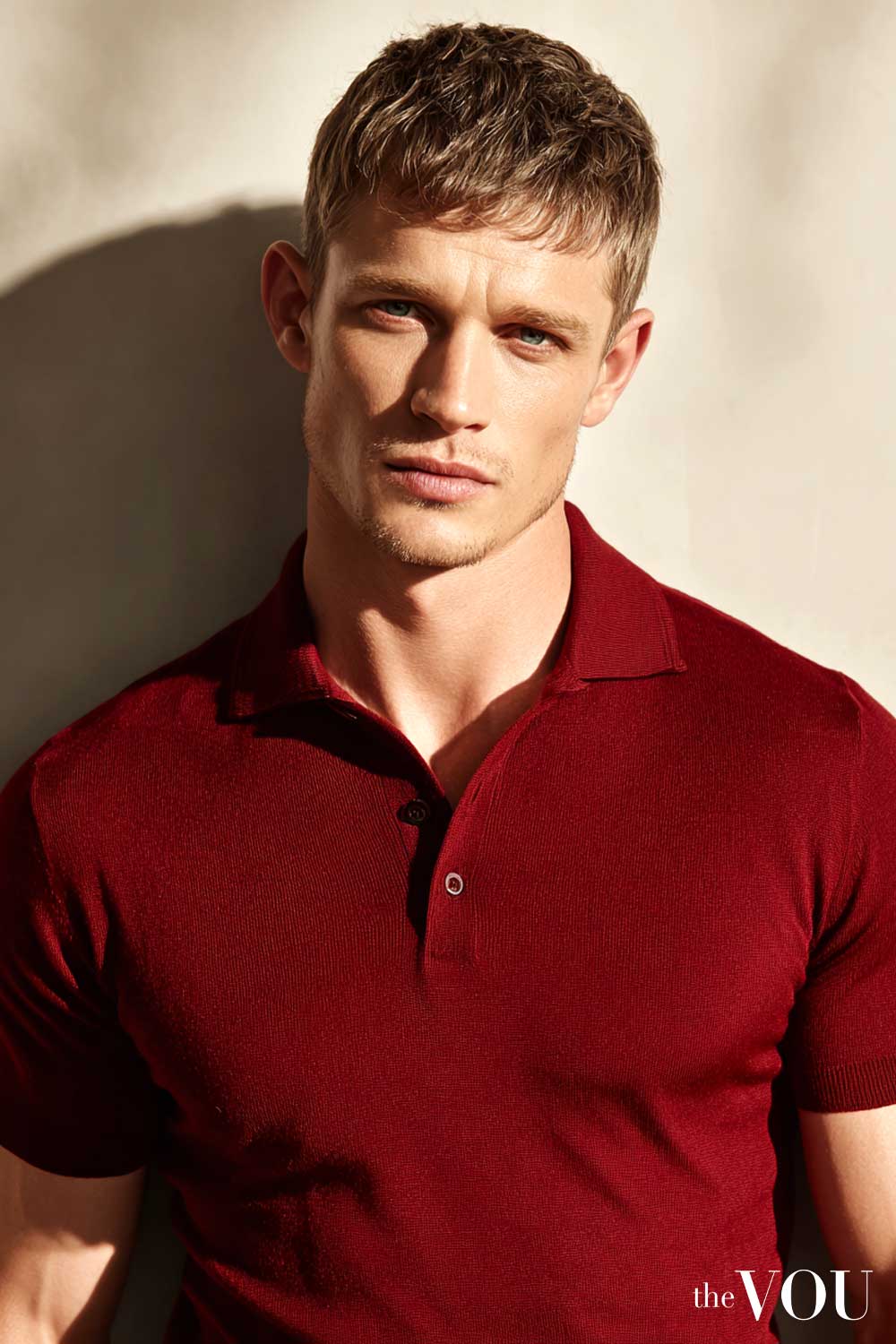
In a 2010 paper by Andrew Elliot and colleagues, seven experiments examined women’s responses to men shown with red backgrounds or clothing.
The authors reported higher ratings of attractiveness and sexual desirability in relevant comparisons.
This was a study of particular experimental conditions, not a ranking of every clothing colour or a test of seasonal palettes.
Si confonde facilmente con Elliot and Niesta’s 2008 study, which examined men’s attraction to women.
The participants and people being rated matter: a finding about one group is not automatically evidence about another.
Un dopo re-examination by Hesslinger, Goldbach and Carbon reported no statistically significant red effect in two experiments.
The first used a photograph against red or white backgrounds; the second used photographs of several men in different clothing styles.
These were also controlled photo-rating tasks, with their own sampling and design limits.
The reasonable wardrobe conclusion is modest: red is an option to try, not a reliable attraction technique.
A finding in one experiment does not guarantee an effect on a date; a failure to reproduce it does not prove that colour can never affect anyone’s impression.
Why a survey cannot supply your personal colour ranking
Before treating “most women prefer black” as shopping advice, check who answered, how they were recruited, what they saw and what question they were asked.
Choosing a favourite colour name is different from comparing the same shirt in different shades, and neither is the same as meeting someone wearing a complete outfit.
Without those details, an isolated percentage offers little guidance.
It also cannot establish that black communicates intelligence, that blue makes you trustworthy or that purple improves your chances of getting a date.
Those promises are not established by the sources reviewed for this article.
There is no need to turn the uncertainty into a ban on orange, yellow or brown.
Nor does a result from women rating men describe every possible audience or relationship.
Choose the effect you want in the outfit
The combinations below are styling suggestions, not research findings or attraction rankings.
Use garments you already own where possible.
Scorri orizzontalmente per visualizzare tutte le colonne →
| Direzione del colore | Completo completo | What the combination does |
|---|---|---|
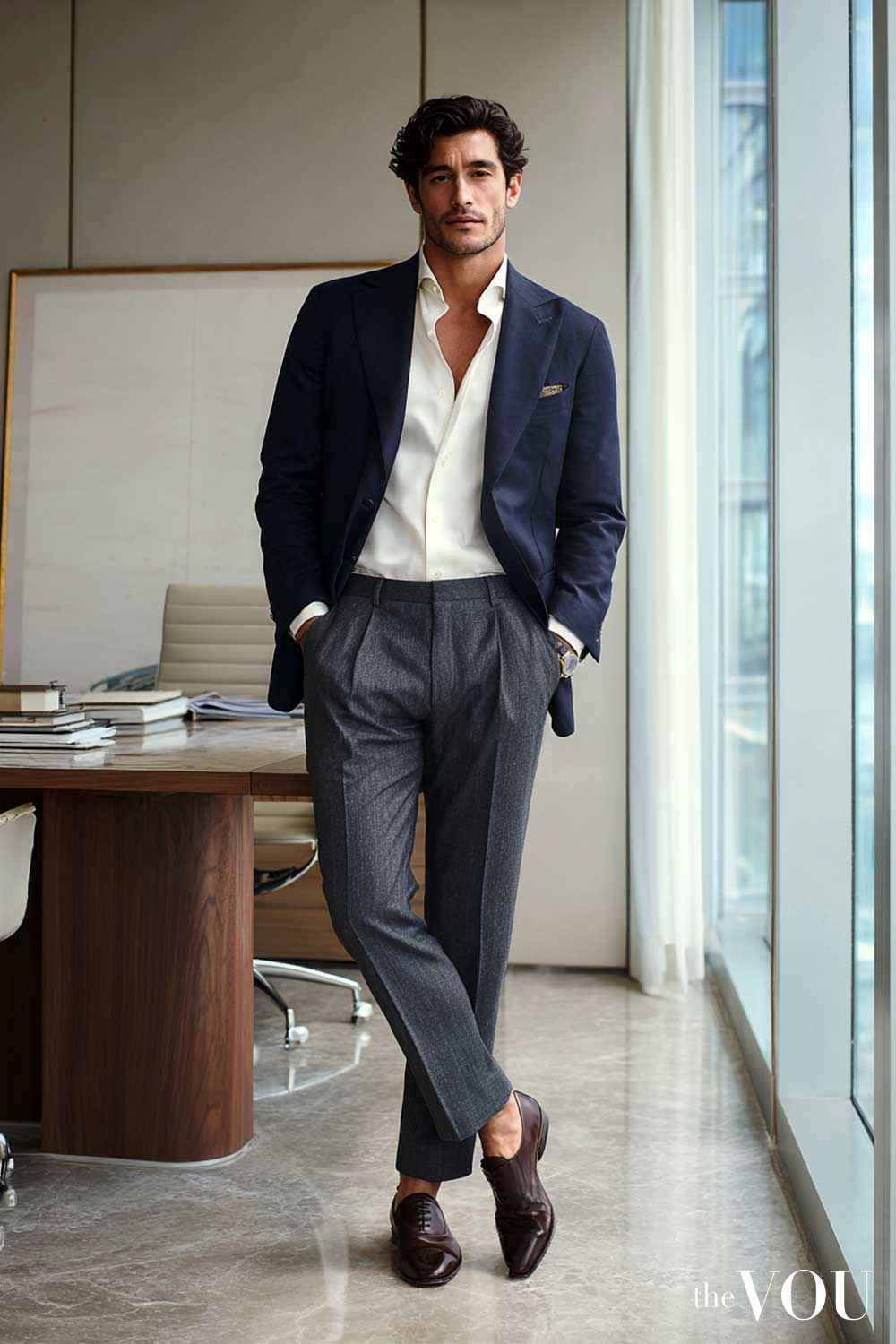
| A restrained red accent | Navy jacket and trousers, pale blue shirt, burgundy tie, navy socks and dark brown leather shoes | The small red area adds colour while the navy garments keep the overall outfit restrained. Use where a jacket and tie suit the setting; burgundy is a suggestion, not the exact red tested in an experiment. |
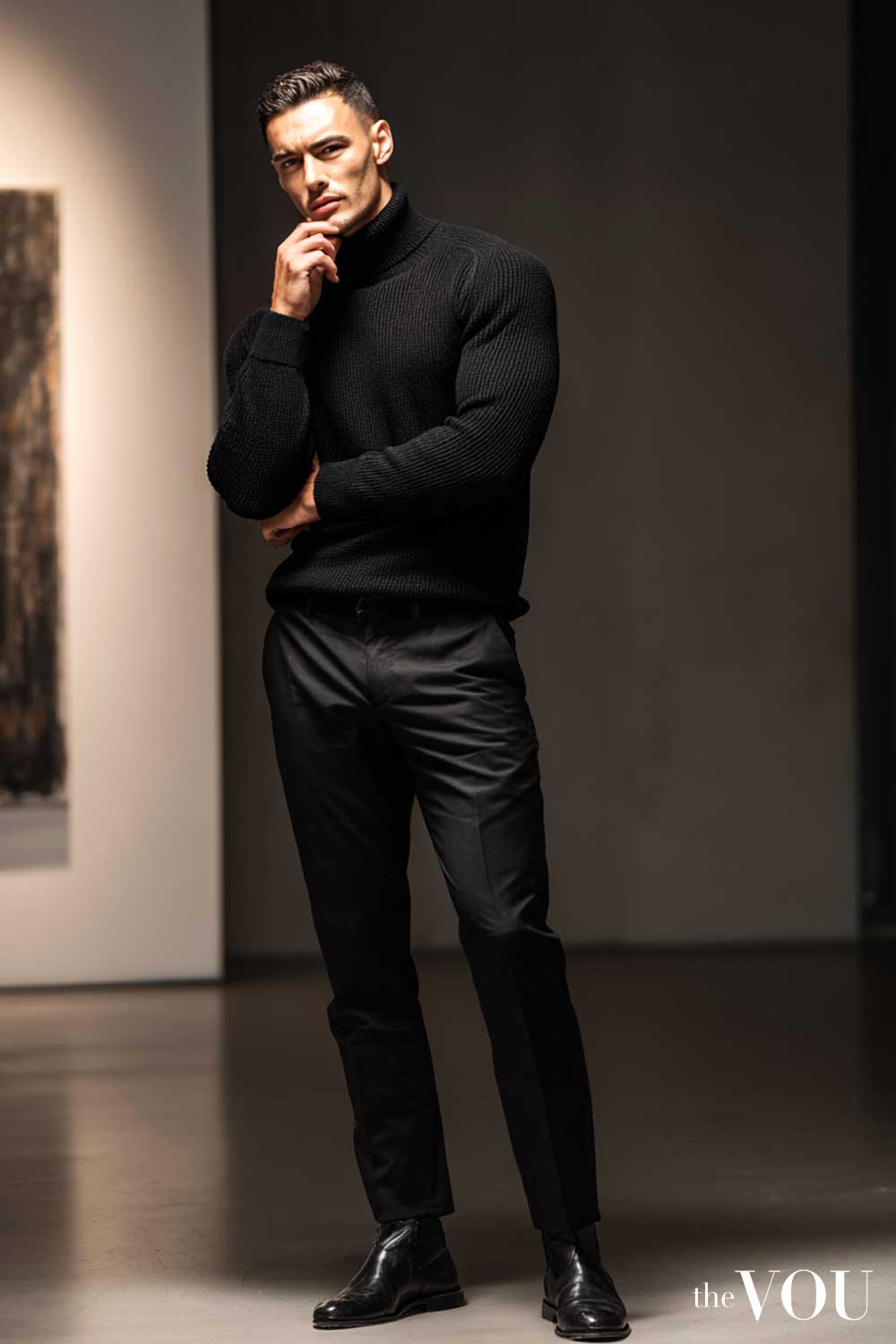
| Black with visible separation | Black crew-neck jumper, charcoal trousers, black socks and black loafers | The lighter trousers distinguish the garments without a vivid accent. This is a smart-casual option where the venue permits; a dark outfit alone is not black tie. |
| Blue with a lighter base | Medium-blue Oxford shirt, stone chinos, brown socks and brown suede loafers | The difference in lightness separates the shirt from the trousers. Try a paler or deeper blue with the same chinos to compare the effect near your face. |
| Brown and cream | Chocolate-brown cardigan, cream T-shirt, dark indigo jeans, dark brown socks and brown boots | The light neckline breaks up the darker garments. Brown remains useful near the face; it does not need permission from an attractiveness survey. |
| A clearer warm accent | Ochre knit, navy trousers, navy socks and brown loafers | The knit provides the main colour contrast. Wear it alone if you enjoy its prominence, or add a navy jacket to reduce the visible area. |
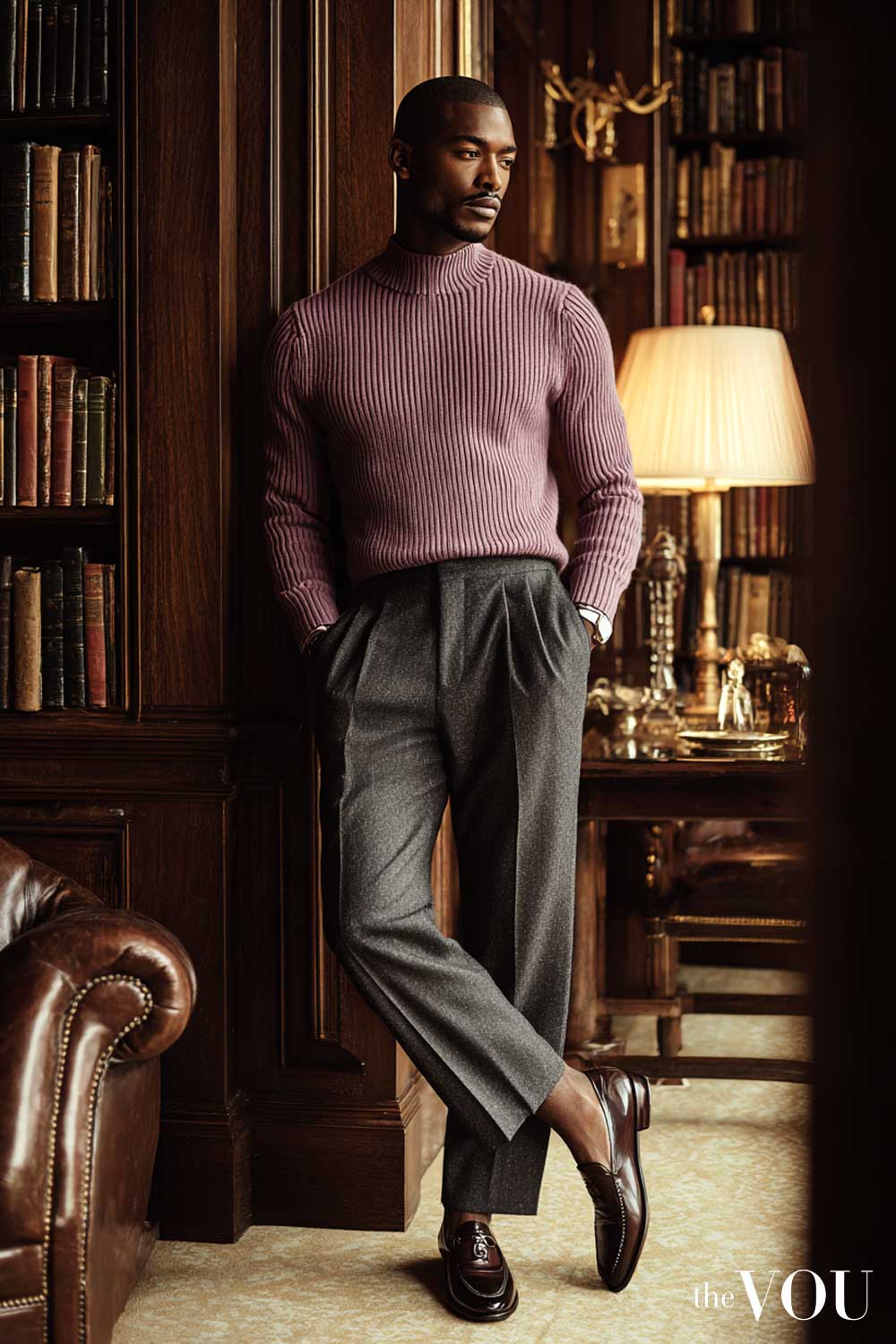
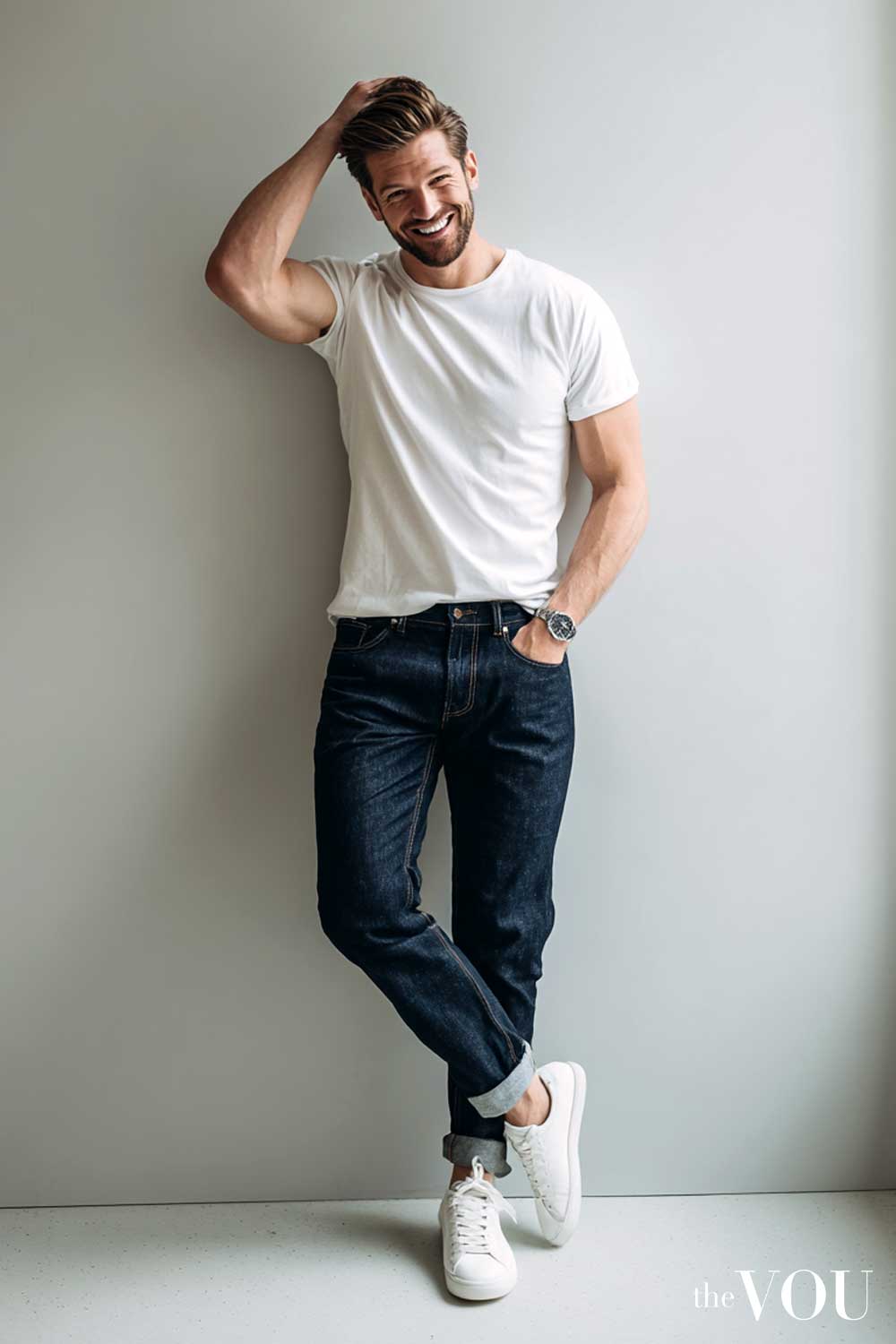
For a date, choose among these by the venue and activity.
A walk, an informal meal and an event with an explicit dress code call for different clothes.
Ask the organiser when the requirements are unclear.
Colour preference should not make you ignore required formalwear or a workplace uniform.
Compare garments without turning features into rules
Skin depth, visible skin cast, hair and eyes are observations, not automatic instructions.
Deeper skin does not require jewel tones; light hair does not require muted clothing; auburn hair does not make every warm colour suitable.
Matching a shirt to your eyes is an optional colour repetition, not a demonstrated attraction advantage.
Try two shirts with the same trousers and shoes in consistent light.
Note separately whether you like the shirt itself, whether you like the contrast beside your face and whether it suits the whole outfit.
Repeat an unclear comparison instead of forcing a warm, cool or seasonal label.
If you want a structured vocabulary for these comparisons, our Guida ai colori stagionali per uomo explains the four families and twelve palettes.
Treat them as interpretive styling tools.
The red-attraction studies discussed above do not validate those categories.
Domande comuni
Q. Should I wear red on a first date?
If you like it and it fits the setting, yes.
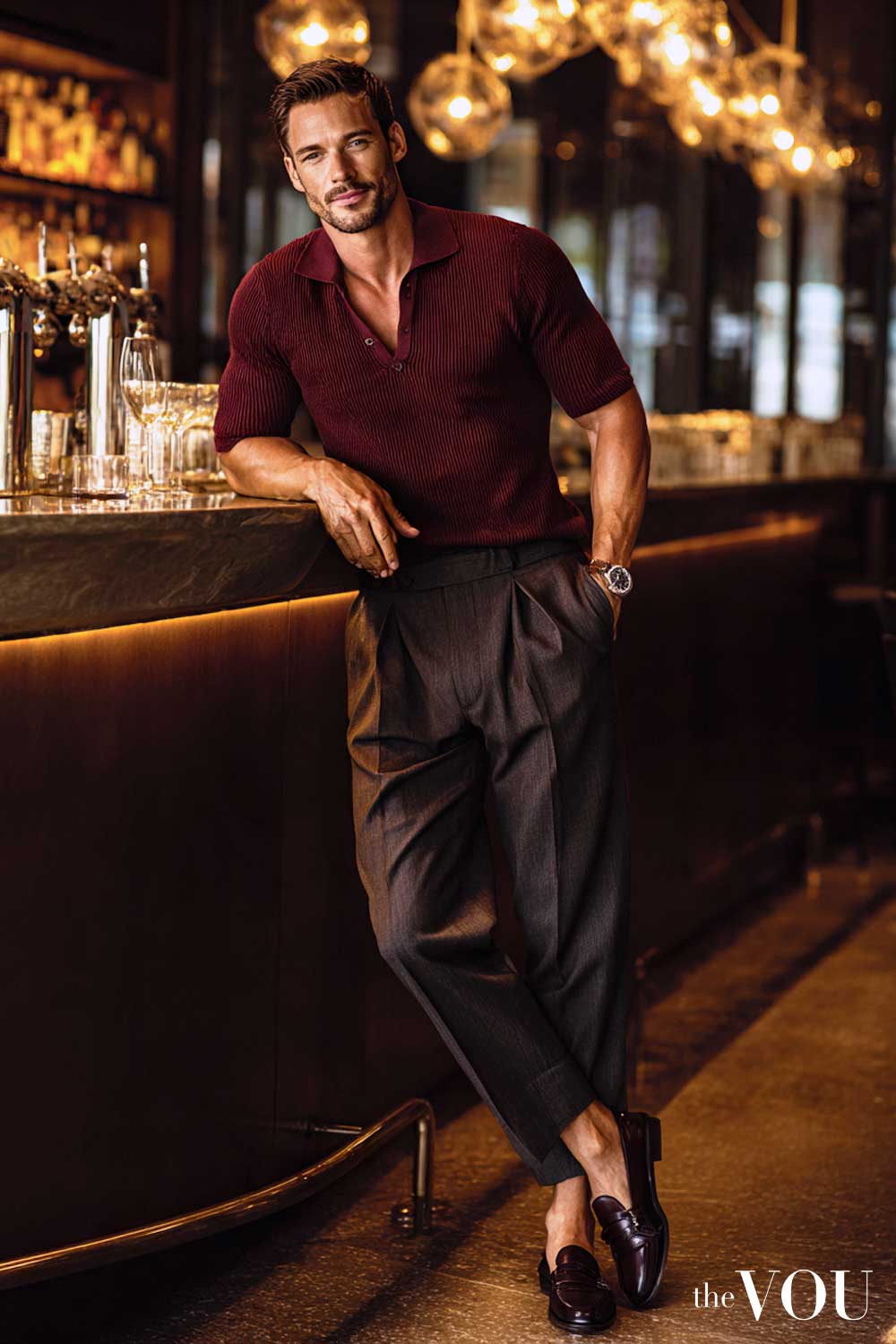
You can use a red knit or a smaller accent such as a burgundy tie.
Neither choice guarantees attraction, and disliking red is a sufficient reason to choose another colour.
Q. Is black a safe choice for everyone?
Black is useful, but the garment and occasion still matter.
Compare a black shirt with charcoal, navy or another colour you own if you want a different effect.
Keep required black shoes or formalwear; there is no need to replace them because of a palette label.
Q. Which colour gets the most compliments?
The sources reviewed do not establish a dependable winner for every man.
A compliment is useful personal feedback, but it does not confirm a season or explain whether the person responded to colour, fit, styling or familiarity.
Q. Will a particular colour make me more confident?
You may feel more comfortable in some clothes than others.
Record that preference without assuming the same hue will have the same psychological effect on everyone.
Practising a complete outfit before the occasion can help you decide whether you want to wear it.
Guide correlate su The VOU: formal dress codes for men, how to dress in a casual style.
Mandy Meyer, per The VOU, si concentra sullo styling maschile, sulla vestibilità dei capi e sulle proporzioni degli outfit. I suoi articoli affrontano le questioni pratiche che si celano dietro la scelta di un guardaroba: come una giacca si appoggia sulle spalle, come cadono i pantaloni e come i diversi tagli modificano la silhouette che chi li indossa desidera creare.
I suoi ambiti di ricerca includono le forme del corpo come il triangolo, il triangolo invertito, il rettangolo, l'ovale, il trapezio, la clessidra e il rombo, utilizzate nello styling. Queste forme forniscono punti di partenza per confrontare le proporzioni visibili; tuttavia, non rappresentano ogni tipo di corpo né prescrivono un unico modo corretto di vestirsi. L'attenzione si concentra sul collegamento tra queste osservazioni e la forma, la costruzione e la lunghezza degli indumenti, nonché sulla relazione tra la parte superiore e inferiore di un completo.
La sezione editoriale di Mandy combina confronti visivi con verifiche di vestibilità in termini di comfort e libertà di movimento. I lettori possono valutare se un taglio offre la vestibilità desiderata, individuare punti in cui il capo tira o si arriccia e quali modifiche potrebbero valorizzare il look preferito. L'obiettivo è rendere più comprensibili le scelte di abbigliamento maschile, mantenendo al centro le preferenze personali e gli obiettivi di stile di chi indossa il capo.